
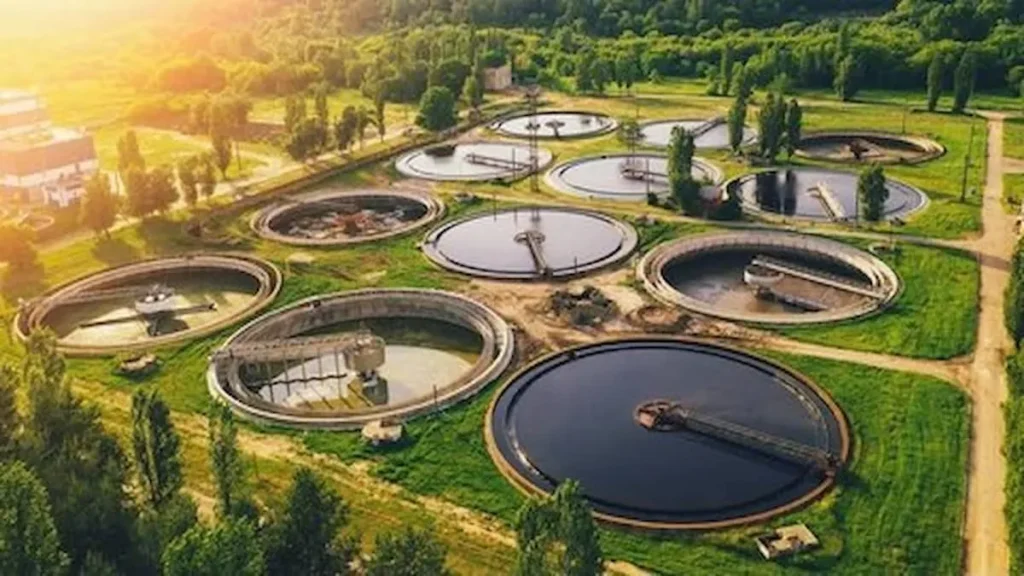
Clean water is a basic requirement for public health and environmental well-being. However, increasing industrial and human activities generate vast quantities of wastewater. This wastewater contains pollutants that can harm ecosystems and pose health risks. Wastewater treatment is an essential process that helps mitigate these threats by ensuring the safe disposal and potential reuse of wastewater.
Biological wastewater treatment methods have gained prominence today due to their efficiency, cost-effectiveness, and environmental sustainability. These techniques rely on naturally occurring microorganisms to break down organic compounds present in wastewater. While the natural microbial population is essential, its diversity and effectiveness can be limited. Hence, bio culture for wastewater treatment emerges as a powerful tool.
Bio culture refers to a concentrated population of beneficial microorganisms, primarily bacteria and sometimes fungi, which are specifically chosen and cultivated to improve the biological breakdown of pollutants in wastewater. Here, you can explore the science behind bio culture while understanding different types and their mechanisms of action within wastewater treatment.
Wastewater Treatment: A Biological Process
The natural microbial population present within wastewater treatment systems may not always be sufficiently diverse or robust to handle the various pollutants present. Biological or bioremediation wastewater treatment utilizes the inherent ability of different microorganisms to break down organic matter present in wastewater. These microbes act as nature’s decomposers that dismantle complex organic molecules into simpler and harmless components.
Similarly, bioaugmentation is the process in which microbial cultures are chosen specifically to improve and speed up the biological treatment process. Bio culture for ETP (Effluent Treatment Plant) and bio culture for STP (Sewage Treatment Plant) applications provides a targeted approach to optimizing wastewater treatment efficiency.
Demystifying Bio Culture
Bio culture is a complex formulation that compromises an array of beneficial microorganisms, primarily bacteria, with the occasional inclusion of fungi. These cultures are often developed from naturally occurring strains that demonstrate exceptional biodegradative capabilities. These bio culture products undergo a careful formulation and production process to ensure optimal viability and efficacy when introduced into wastewater treatment systems.
Bio culture offers several advantages over relying solely on the existing microbial community.
Demystifying Bio Culture
Bio culture is a complex formulation that compromises an array of beneficial microorganisms, primarily bacteria, with the occasional inclusion of fungi. These cultures are often developed from naturally occurring strains that demonstrate exceptional biodegradative capabilities. These bio culture products undergo a careful formulation and production process to ensure optimal viability and efficacy when introduced into wastewater treatment systems.
Bio culture offers several advantages over relying solely on the existing microbial community.
Increased Treatment Efficiency and Pollutant Removal Rates
Bio culture introduces specialized microorganisms in wastewater. With their capabilities and rapid action, they degrade specific pollutants, leading to faster and more complete treatment.
Enhanced Degradation of Specific Contaminants
Tailored bio cultures help to target and degrade specific pollutants, such as hydrocarbons or pharmaceuticals, that may be resistant to natural microbial populations.
Improved System Stability and Resilience
Bio culture helps establish a robust and diverse microbial community, which leads to a more stable and resilient wastewater treatment system. It is better equipped to handle fluctuations in wastewater composition or operational challenges.
Exploring Different Types of Bio Culture
Bio culture encompasses a range of formulations designed to address specific wastewater challenges. Some common types are,
Aerobic Cultures
These cultures thrive in the presence of oxygen and are highly efficient in breaking down organic pollutants. They are commonly used in activated sludge processes, which is a widely employed biological treatment method.
Anaerobic Cultures
These cultures function effectively in oxygen-limited environments. They are specialized in degrading complex organic compounds and are ideal for applications like industrial wastewater treatment or sludge digestion.
Nitrifying Cultures
These types of cultures optimize the nitrification process. It is an essential step in biological treatment that converts ammonia, a harmful pollutant, into less harmful nitrates or nitrites.
Degrading Cultures
These cultures are designed to target specific pollutants, such as hydrocarbons (oil and grease) or pharmaceuticals, that may be present in wastewater streams from specific industries. Each bio culture type is carefully composed to address the specific needs and challenges of the target wastewater treatment application.
Bio Culture Applications in Different Industries
| Industry | Potential Pollutants | Bio Culture Target |
|---|---|---|
| Municipal Wastewater Treatment | Organic Matter, Ammonia | Generalist cultures for organic breakdown, Nitrifying cultures for ammonia conversion |
| Industrial Wastewater Treatment (Oil & Gas) | Hydrocarbons (oil & grease) | Degrading cultures specifically designed for hydrocarbons |
| Industrial Wastewater Treatment (Pharmaceuticals) | Pharmaceuticals and other emerging contaminants | Tailored bio cultures to target specific drug classes or contaminants |
| Food Processing Industry | Organic matter, Fats, Oils, and Greases (FOG) | Bio cultures suited for high organic loads and FOG |
Understanding Bio Culture Mechanisms: How Microorganisms Work
The success of bio culture in wastewater treatment lies in the diverse mechanisms employed by its resident microorganisms.
Enzymatic Degradation
Microorganisms produce an array of enzymes that act like biological scissors, breaking down complex organic molecules into simpler components. They are readily consumed by the microbes themselves or other organisms within the treatment system.
Biosorption
Certain microorganisms passively bind pollutants to their cell surfaces through a process known as biosorption. This acts as a physical removal mechanism, temporarily sequestering pollutants until they can be degraded or otherwise removed from the system.
Bioaccumulation
Some microbes actively take up and concentrate specific pollutants within their cells. This process is known as bioaccumulation, which effectively removes pollutants from the wastewater stream while providing a source of carbon and nutrients for the microbial population.
Cometabolism
This intriguing mechanism involves the degradation of one pollutant, which provides energy and nutrients for the breakdown of another. Certain microbial cultures can utilize readily degradable organic matter as a fuel source, allowing them to simultaneously degrade more complex pollutants that may be resistant to degradation on their own.
Optimizing Bio Culture Performance: A Collaborative Effort
While bio culture offers significant benefits, creating an environment conducive to its optimal performance is essential. A harmonious interplay of factors is essential for maximizing the effectiveness of these microbial workhorses.
Nutrient availability is important for bio culture success. Microorganisms require specific nutrients to grow and multiply. Hence, a balanced supply of essential elements like nitrogen, phosphorus, and carbon is vital. Careful monitoring and supplementation of nutrients can prevent deficiencies that hinder bio culture activity.
Maintaining appropriate oxygen levels is another critical factor, particularly for aerobic cultures. Oxygen is essential for the respiration process that powers microbial metabolism. Adequate aeration in wastewater treatment systems ensures the availability of oxygen for efficient biodegradation.
pH control is equally important. Microorganisms have optimal pH ranges for growth and activity. Maintaining the pH within the desired range promotes efficient bio culture performance and prevents inhibitory conditions.
Regular monitoring and maintenance are indispensable components of bio culture management. By tracking key parameters such as dissolved oxygen, pH, nutrient levels, and microbial population dynamics, operators can address potential problems and take corrective actions promptly.
Conclusion
Indeed, bio culture is a powerful tool in wastewater treatment technologies. By understanding the different types of bio cultures and their underlying mechanisms of action, we can harness their potential to improve treatment efficiency and protect the environment.
With proper understanding and collaborative efforts, bio culture can be implemented successfully. Amoda Chem, one of the leading STP and ETP chemicals manufacturers, offers a range of bio cultures such as AMODA Microclean 01 for Effluent Treatment, AMODA Microclean 02 for Sewage Treatment, AMODA Microclean 03 for Anaerobic, AMODA Microclean 05 for Oil & Grease Removal, AMODA Microclean 06 for Septic Bio cleaner, AMODA Microclean 07 for Lake & Pond Cleaner, AMODA Microclean 08 for Organic Waste Composting, and AMODA Microclean 04 for Hospitals Waste Treatment, specially designed to meet your needs.
By partnering with Amoda Chem, you can leverage our expertise and experience in bio culture and gain access to our innovative products designed to optimize your wastewater treatment process.
Contact us today to optimize wastewater treatment through the power of bio culture!